schlage co 100 user manual
Schlage CO-100 Series User Manual: A Comprehensive Guide
This manual provides detailed instructions for the Schlage CO-100 offline lock, covering functions, setup, credential management, and programming.
It’s designed to assist users in effectively utilizing all features, ensuring secure and convenient access control. Explore lock capabilities and daily operations.
Overview of the Schlage CO-100 Lock
The Schlage CO-100 is a robust, offline access control solution designed for commercial applications. This lock offers a significant upgrade over traditional mechanical key systems, providing enhanced security and flexible access management. It operates on a standalone basis, meaning it doesn’t require wiring to a network or computer for basic functionality – simplifying installation and reducing costs.
Key features include support for multiple credential types, allowing administrators to choose the best option for their security needs. The CO-100 facilitates easy credential programming directly on the lock, eliminating the need for specialized software in many cases. Different credential functionalities, such as Normal Use, Toggle, Freeze, and Pass Through, cater to diverse access requirements, from permanent employees to temporary visitors.
This lock is ideal for environments where real-time access control isn’t essential, but a reliable and manageable system is desired. Its durable construction ensures long-lasting performance, and its intuitive interface simplifies operation for both administrators and users. The CO-100 provides a balance of security, convenience, and cost-effectiveness.
Lock Functions and Capabilities
The Schlage CO-100 lock boasts a comprehensive suite of functions designed for versatile access control. Core capabilities include support for various credential types – cards, fobs, and PIN codes – offering flexibility in user identification. Programming is primarily conducted directly on the lock, streamlining administration and minimizing reliance on external software.
A key function is the ability to assign different credential attributes: Normal Use for standard access, Toggle for temporary enabling/disabling, Freeze for suspending a credential without deleting it, and Pass Through for strictly time-limited access. These options allow granular control over who can enter and when.
Beyond basic access, the CO-100 supports Construction Access Mode for simplified management during building projects. Other programming options allow customization of lock settings to suit specific security protocols. The lock also features an audit trail function, recording access events for review. Its offline nature ensures continued operation even during network outages, maintaining security and convenience.
Getting Started with Your Schlage CO-100
Before initiating operation, ensure the Schlage CO-100 lock is properly installed according to the separate installation guide. Once physically installed, the initial focus is on establishing communication with the lock for programming. Familiarize yourself with the lock’s keypad and indicator lights; these provide crucial feedback during setup and operation.
The first step typically involves activating Construction Access Mode, a simplified access scheme designed for initial building phases. This allows authorized personnel entry without requiring individual credentials. Following construction, transitioning to standard credential-based access is essential.
Review the battery compartment location and ensure fresh batteries are installed. The lock will indicate low battery status when replacement is needed. Understand the basic lock operation – how to lock/unlock manually and the function of the exterior keypad. Refer to the manual for detailed programming instructions before adding users or customizing settings. A thorough understanding of these initial steps will ensure a smooth and secure setup process.
Construction Access Mode: Initial Setup
Construction Access Mode provides temporary, unrestricted access to the Schlage CO-100 lock during building or renovation phases. This mode bypasses credential requirements, allowing authorized personnel entry without pre-programmed codes. Activation is typically performed during initial lock setup, offering immediate access for installers and construction teams.
To enable Construction Access Mode, a specific programming sequence must be followed using the lock’s keypad. This sequence, detailed in the programming instructions, usually involves entering a designated code or combination. Once activated, the lock will grant access to anyone attempting to operate it.
Crucially, Construction Access Mode is intended for temporary use only. Upon completion of construction, it must be disabled and replaced with a secure, credential-based access system. Failure to deactivate this mode compromises security, allowing unauthorized individuals access. The deactivation process also involves a specific programming sequence, reversing the initial activation steps. Always verify successful deactivation by testing the lock with a known credential.
Credential Types Supported
The Schlage CO-100 lock supports a variety of credential types, offering flexible access control options. These include standard credentials, providing permanent access for authorized users; toggle credentials, enabling or disabling access with each use; and freeze credentials, temporarily suspending access without deleting the user’s information.
Additionally, the CO-100 supports pass-through credentials, designed for one-time or limited-duration access, ideal for visitors or service personnel. Each credential type caters to different security needs and operational requirements. Standard credentials are suitable for employees with ongoing access needs, while toggle credentials offer controlled access for specific situations.
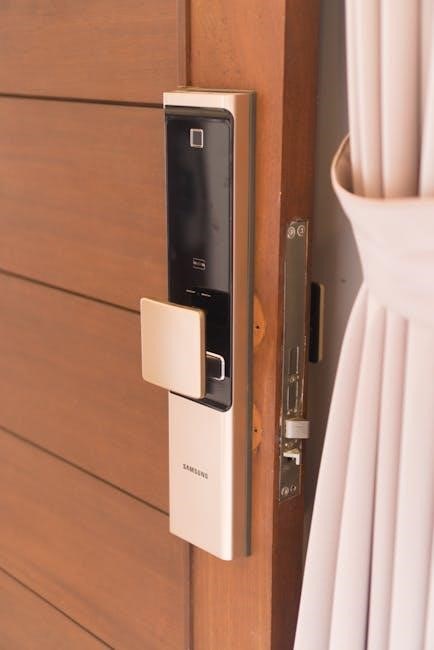
Freeze credentials provide a convenient way to restrict access temporarily, such as during investigations or employee leave. Pass-through credentials minimize security risks associated with long-term credential distribution. The lock’s programming interface allows administrators to assign appropriate credential types to each user, tailoring access permissions to their specific roles and responsibilities. Understanding these distinctions is key to maximizing the lock’s security features.
Standard Credentials: Functionality
Standard credentials within the Schlage CO-100 system represent the most common form of access control, granting permanent access rights to authorized individuals. These credentials remain active until explicitly deleted by an administrator, making them ideal for employees, residents, or anyone requiring consistent access to secured areas. Unlike toggle or freeze credentials, standard access isn’t subject to temporary activation or suspension.
Programming a standard credential involves assigning a unique code or card to a user, effectively adding them to the lock’s authorized access list. Once programmed, the user can unlock the door simply by presenting their assigned credential to the reader. This streamlined process ensures quick and efficient entry for frequent users.

Administrators can easily manage standard credentials through the lock’s programming interface, adding new users, deleting existing ones, or modifying access permissions as needed. The simplicity and reliability of standard credentials make them a cornerstone of the CO-100’s access control system, providing a robust and user-friendly solution for ongoing access management.
Toggle Credentials: Operation Details
Toggle credentials on the Schlage CO-100 offer a unique access control method, allowing administrators to remotely enable or disable access rights without deleting the credential from the system. This functionality is particularly useful for temporary access scenarios, such as granting access to service personnel or contractors during specific timeframes. The credential remains stored within the lock, ready for reactivation when needed.
Initially, a toggle credential is programmed into the lock in a disabled state. An administrator must then actively “toggle” the credential to the “on” position to grant access. Subsequently, toggling it again returns the credential to the “off” position, revoking access. This on/off switching provides granular control over access permissions.
Toggle credentials are ideal when access needs to be frequently granted and revoked for the same individual. This eliminates the need for constant credential deletion and reprogramming, saving time and simplifying access management. The system provides a clear indication of the credential’s current status – enabled or disabled – ensuring accurate access control.
Freeze Credentials: Security Features
Freeze credentials on the Schlage CO-100 represent a heightened level of security, designed for situations demanding absolute control over access. Unlike toggle credentials, freezing a credential permanently disables it within the lock’s memory, requiring complete deletion and reprogramming for reactivation. This feature is crucial when dealing with terminated employees or compromised credentials.
When a credential is frozen, the lock immediately revokes all access rights associated with that specific code. Attempts to use a frozen credential will be denied, and the event may be logged depending on the lock’s configuration. This provides a robust security measure against unauthorized entry.
Freezing a credential is a deliberate action, intended for permanent access revocation. It’s a more secure alternative to simply disabling a toggle credential, offering peace of mind in sensitive security environments. The process ensures that even if a credential falls into the wrong hands, it cannot be reused to gain access to the secured area. Careful consideration should be given before freezing a credential, as reactivation requires full reprogramming.
Pass Through Credentials: Temporary Access
Pass Through credentials on the Schlage CO-100 lock offer a flexible solution for granting temporary access to individuals. These credentials are programmed with a specific start and end date, automatically becoming inactive once the designated timeframe expires. This eliminates the need for manual credential deletion and reprogramming, streamlining access management.
Ideal for visitors, contractors, or service personnel, Pass Through credentials provide controlled, time-limited entry. The lock administrator defines the precise duration of access, ensuring security is maintained. Once the expiration date arrives, the credential is automatically deactivated, preventing further use.
This feature is particularly useful in environments where frequent access changes occur. It minimizes administrative overhead and reduces the risk of unauthorized access due to forgotten or un-deleted credentials. Pass Through credentials offer a convenient and secure method for managing temporary access needs, enhancing overall security protocols without requiring constant manual intervention. Proper date and time settings on the lock are crucial for accurate credential operation.
Manual Programming Instructions: A Step-by-Step Guide
The Schlage CO-100 lock allows for manual programming directly on the device, offering a convenient alternative to remote management systems. To begin, ensure the lock is powered on and in programming mode – typically initiated by a master credential or a specific key sequence. The lock’s display will guide you through the process.
Programming involves navigating a menu system using the lock’s keypad. Each credential type (Normal Use, Toggle, Freeze, Pass Through) has a dedicated programming path. Follow the on-screen prompts to enter the desired credential number and associated parameters, such as start/end dates for Pass Through credentials.
Carefully confirm each entry before saving, as errors can lead to incorrect access control. The lock provides visual and auditory feedback to confirm successful programming. Refer to the detailed sections on each credential type for specific instructions. Always test newly programmed credentials to verify functionality. Remember to consult the full user guide for comprehensive details and troubleshooting tips.
Important Notes Regarding Programming
When programming the Schlage CO-100 lock, several crucial points must be observed to ensure optimal security and functionality. Always double-check credential numbers and parameters before saving, as incorrect entries can grant unintended access or deny legitimate users. Regularly audit programmed credentials to identify and remove outdated or unnecessary entries.
Be mindful of credential types – Normal Use for standard access, Toggle for on/off control, Freeze for temporary suspension, and Pass Through for limited-time access. Understand the implications of each type before assigning it. When setting Pass Through credentials, accurately define the start and end dates/times to prevent unauthorized prolonged access.
Maintain a detailed record of all programmed credentials, including user names, credential numbers, and assigned access levels. This documentation is invaluable for troubleshooting and security audits. Finally, remember to save all programming changes and test each credential to confirm proper operation. Refer to the complete user guide for detailed explanations and best practices.
Programming a New Credential: Detailed Process
To program a new credential on the Schlage CO-100, initiate the programming mode via the lock’s interface, typically requiring a master code. Select the desired credential type – Normal Use, Toggle, Freeze, or Pass Through – based on the intended access level. The system will then prompt for a unique credential number; ensure this number hasn’t been previously assigned.
Carefully enter the credential number, followed by any associated parameters, such as start and end dates for Pass Through credentials. Confirm all entered information before saving. The lock will provide visual or auditory feedback confirming successful programming. It’s crucial to test the newly programmed credential immediately to verify functionality.
For enhanced security, consider utilizing a credential management system to track assigned numbers and access levels. Regularly review and update credentials as personnel changes occur. Detailed instructions and troubleshooting tips are available in the comprehensive user guide, ensuring a smooth and secure credential programming experience.
Normal Use Credentials: Daily Operations
Normal Use credentials on the Schlage CO-100 provide standard, ongoing access to authorized individuals. These credentials function consistently, granting access whenever presented to the lock, unlike Toggle or Pass Through options. Daily operations with Normal Use credentials involve users simply presenting their assigned credential – a card, fob, or PIN – to the lock for verification.
The lock quickly processes the credential, unlocking the door if valid. For enhanced security, regularly audit Normal Use credentials to ensure only authorized personnel retain access. Consider implementing a policy for reporting lost or stolen credentials promptly.
Administrators can easily manage Normal Use credentials through the lock’s programming interface, adding, deleting, or modifying access as needed. This credential type is ideal for employees with consistent access requirements, offering a balance of convenience and security in daily building operations. Refer to the programming section for detailed instructions.
Programming Normal Use Credentials
To program a Normal Use credential on the Schlage CO-100, initiate the programming mode via the lock’s interface. Typically, this involves entering a master code followed by the designated programming command. The system will then prompt you to present the credential – card or fob – to be programmed. Ensure the credential is compatible with the lock’s reader.
After successful reading, the lock will request a credential number or assign one automatically. Confirm the assigned number and finalize the programming process. For PIN-based Normal Use credentials, the system will guide you through setting a unique PIN code. Always document the assigned credential numbers and PINs for future reference and management.
Verify the newly programmed credential by testing access. If unsuccessful, repeat the programming steps, ensuring correct code entry and credential presentation. Refer to the ‘Manual Programming Instructions’ section for a detailed, step-by-step guide. Proper programming ensures seamless and secure access for authorized users.
Toggle Credential Programming
Programming Toggle credentials on the Schlage CO-100 allows for on-demand access, activated or deactivated by an administrator. Initiate programming mode using the master code and the specific command for Toggle credential assignment. The lock will prompt for credential presentation – card or fob – which must be held in place for successful enrollment.
Unlike Normal Use credentials, Toggle credentials don’t have a permanently assigned access profile. They require explicit activation via the lock’s interface or management software. When activated, the credential grants access; when deactivated, it’s temporarily denied. This feature is ideal for visitors or temporary staff.
Document all Toggle credentials and their activation status. Regularly review and update the activation list to maintain security. Refer to the ‘Manual Programming Instructions’ for detailed steps. Remember to test the credential’s functionality after programming and activation to confirm proper operation. Proper management of Toggle credentials enhances access control flexibility.
Freeze Credential Programming
Freeze credentials on the Schlage CO-100 offer a heightened security measure, allowing administrators to remotely disable a lost or compromised credential without physically retrieving it. To program a Freeze credential, enter programming mode using the master code and the designated command. The lock will request credential presentation – card or fob – for enrollment.
Once programmed, a Freeze credential functions like a Normal Use credential until explicitly frozen. Freezing is achieved through the lock’s interface or management software, immediately revoking access rights. This prevents unauthorized entry, even if the credential remains in circulation. Unlike deleting a credential, freezing preserves the record for potential reactivation.
Maintain a detailed log of all Freeze credential actions, including the reason for freezing and the date/time. Regularly audit the Freeze credential list to ensure ongoing security. Refer to the ‘Manual Programming Instructions’ for precise steps. Always test the credential’s access after freezing to verify successful deactivation.

Pass Through Credential Programming
Pass Through credentials on the Schlage CO-100 provide temporary access, ideal for visitors or service personnel. Programming involves entering the lock’s programming mode with the master code, then selecting the Pass Through credential option. The system prompts for credential presentation – card or fob – to be associated with the temporary access profile.
Crucially, define a specific start and end date/time for each Pass Through credential. This ensures access is automatically revoked after the designated period, enhancing security. The lock’s software interface simplifies setting these parameters. Upon credential presentation at the lock, it verifies the validity of the programmed timeframe.
Document all Pass Through credential assignments, including the user, dates, and purpose of access. Regularly review and purge expired credentials to maintain system integrity. Refer to the ‘Manual Programming Instructions’ for detailed steps. Always confirm the programmed timeframe before issuing a Pass Through credential to prevent unintended prolonged access.
Other Programming Options Available
Beyond core credential types, the Schlage CO-100 offers advanced programming features for tailored security. Global schedules allow defining access permissions based on time and day, restricting access during off-hours or specific events. Audit trail settings control the level of event logging, capturing access attempts, programming changes, and low battery warnings for detailed record-keeping.
The lock supports multiple master access codes, enabling tiered administration. You can assign different levels of control to various personnel. Furthermore, the CO-100 allows for lock-to-lock communication, facilitating centralized management of multiple locks within a facility. This feature streamlines credential updates and system-wide policy changes.
Explore the ‘Manual Programming Instructions’ for detailed guidance on these advanced options. Remember to document all programming modifications for future reference and troubleshooting. Regularly review these settings to ensure they align with evolving security needs and operational requirements. Proper utilization of these features maximizes the CO-100’s security potential.
Troubleshooting Common Issues
If the lock fails to recognize a valid credential, first verify the credential type is correctly programmed and the battery level is sufficient. Low batteries are a frequent cause of operational issues. Ensure the credential is presented correctly to the reader, avoiding obstructions. If the lock displays an error message, consult the detailed error code list within this manual for specific guidance.
For communication problems between the lock and a programmer, confirm the programmer’s battery and software are up-to-date. Try re-establishing the connection following the ‘Manual Programming Instructions’. If a user reports being locked out despite a valid credential, double-check their credential status – it may be inadvertently frozen or disabled.
Should issues persist, a factory reset (refer to advanced programming options) may resolve the problem, but will erase all programmed data. Always document any troubleshooting steps taken. If problems continue, contact Schlage Commercial support for assistance, providing the lock’s model number and a detailed description of the issue.
Lock Maintenance and Care
To ensure the longevity and reliable operation of your Schlage CO-100 lock, regular maintenance is recommended. Clean the exterior surfaces with a damp cloth and mild detergent; avoid abrasive cleaners that could damage the finish. Inspect the lock body and strike plate periodically for any signs of physical damage or loosening. Tighten screws as needed to maintain secure alignment.
Pay particular attention to the credential reader, keeping it free from dirt, dust, and debris. Regularly test all programmed credentials to verify functionality. Avoid exposing the lock to extreme temperatures or excessive moisture, as this can affect its performance. Lubricate the interior components – specifically the latch and bolt – annually with a silicone-based lubricant to ensure smooth operation.
Do not disassemble the lock beyond the recommended maintenance procedures. Improper disassembly can void the warranty and compromise security. If you encounter any issues beyond routine maintenance, contact Schlage Commercial support for professional assistance.
Battery Information and Replacement
The Schlage CO-100 lock operates on standard AA batteries. Battery life varies depending on usage frequency and environmental factors, but typically lasts for approximately 10,000 cycles. The lock provides a low battery warning, indicated by a visual signal (typically a flashing red light) and potentially an audible alert, giving ample time for replacement.
When replacing batteries, always use new, high-quality alkaline batteries. Mixing old and new batteries, or using different battery types, can cause malfunctions. It’s recommended to replace all batteries simultaneously, even if only some appear depleted. Ensure correct polarity during installation, following the markings inside the battery compartment.
After battery replacement, the lock may require reprogramming of the time and date. A temporary lockout period may occur during the battery change, but the lock will return to normal operation once the new batteries are properly installed. Retain a record of battery replacement dates for future reference and preventative maintenance.
Technical Specifications of the CO-100
The Schlage CO-100 is an offline electronic lock designed for robust access control. It supports up to 5,000 users, utilizing various credential types including standard, toggle, freeze, and pass-through options. The lock body is constructed from durable materials, ensuring resistance to vandalism and harsh environments.
Communication occurs via infrared (IR) for programming and credential management, eliminating the need for wired connections. It operates on four AA alkaline batteries, providing approximately 10,000 cycles of operation. The lock features a tamper alarm and audit trail capabilities, recording access events for security monitoring.
Dimensions vary slightly depending on the specific model, but generally conform to standard door hardware cutouts. Operating temperature ranges from -31°F to 158°F (-35°C to 70°C). The CO-100 is designed for interior dry locations and complies with ANSI/BHMA A156.37 Grade 2 standards, ensuring reliable performance and security.